3
BPC-157 muscle recovery after a rat crush injury
A calf muscle has to contract again after injury. That gives the recovery experiment a concrete task—and gives muscle-building claims a very different question to answer.
The gastrocnemius experiment
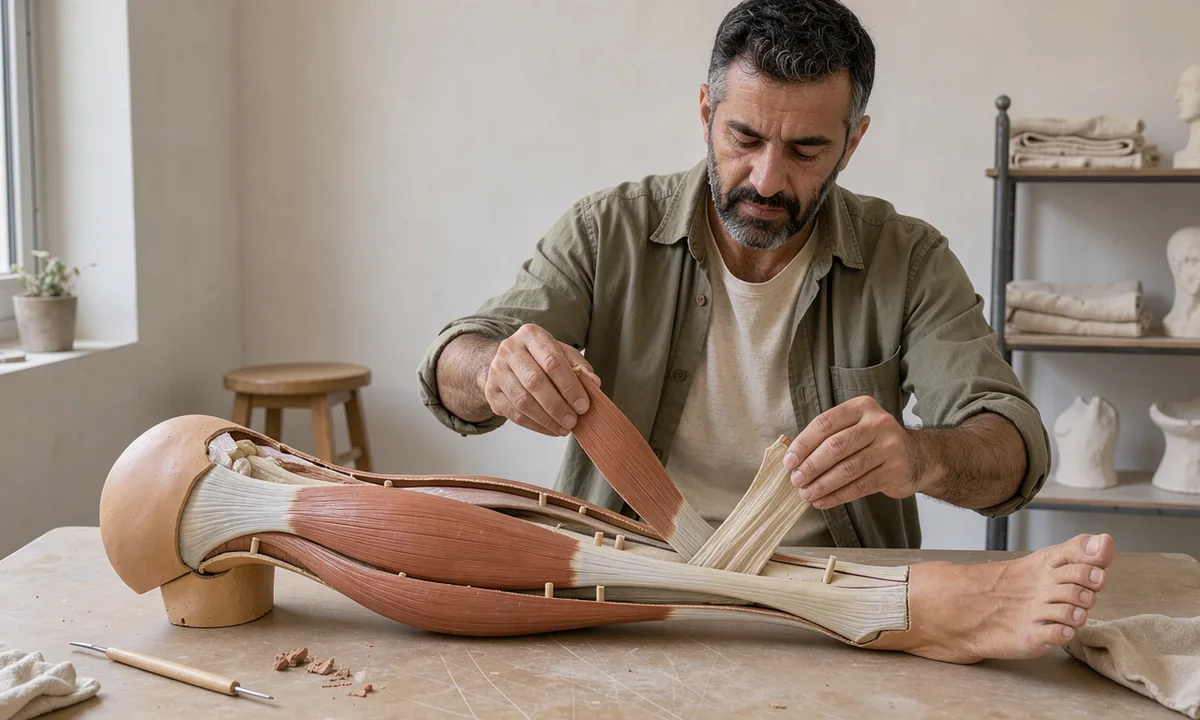
Gastrocnemius is the calf muscle examined in the 2008 BPC-157 crush-injury study. Researchers injured it in rats and reported faster recovery of function and structure with BPC-157. That combination matters to me: recovering tissue has to do something, as well as look more orderly.
The experiment began with damaged muscle. Its outcome concerns recovery after that injury, within a rat model. I admire a calf muscle doing its job again. The broad word recovery becomes less useful when it floats away from the particular injury and measurement.
The 2022 review of striated, smooth and heart muscle gathers protective and healing findings from rodent work across muscle types. Its range is interesting because a calf, the gut's muscle and the heart have different jobs. That breadth also deserves replication by unrelated teams before becoming a universal claim about muscle protection.
Does BPC-157 build muscle?
Published evidence has not demonstrated muscle building in people. The crush experiment measured recovery of injured rat muscle, while the 2025 narrative review identifies muscle building, weight loss and increased testosterone as unsupported online claims.
Hypertrophy means enlargement of muscle. A study designed to measure it would need a different starting condition and outcome from the crushed-muscle experiment. I dislike that switch from damaged tissue to bigger muscles: it changes the question after the result has arrived.
The small human reports concern knee pain, bladder pain and intravenous safety. None establishes improved sports recovery or muscle size in healthy people. Those gaps remain even when the animal histology looks encouraging.
BPC-157 and weight loss
The 2025 review found no support for weight-loss claims. The documented experiments focus on tissue protection and repair. They provide no demonstrated human fat-loss effect or body-composition programme.
A narrow finding earns my patience; that expansion of the sales story exhausts it. A calf muscle recovering from a crush injury already makes an interesting subject; it gains nothing from an unsupported claim about body fat.
Competitive sport
BPC-157 is prohibited at all times by the World Anti-Doping Agency under S0, the category for non-approved substances. The 2025 review discusses the regulatory controversy alongside the sparse clinical evidence. The sport restriction applies regardless of whether an athlete experiences a benefit.
The legal-status page covers the distinct FDA and compounding questions. Neither an encouraging animal result nor a change to a nomination record establishes FDA approval.